

Have you ever wondered what the world looks like through the eyes of someone with color blindness? There is a common misconception that being color blind means seeing the world purely in black and white, like an old movie. While that rare condition does exist, the reality for most people with color blindness is quite different.
The primary issue isn't a lack of color, but rather a difficulty with color differentiation. This means a person might struggle to tell the difference between certain hues - for instance, distinguishing between red, magenta, and green.
In this post, we will explore exactly what is color blindness, the different types that exist, what causes it, and how it can be corrected.
What is Color Blindness?
At its core, color blindness (also known as color vision deficiency) is an inability to see colors in a normal way. For most people with this condition, the main struggle is color differentiation. If you place a red object next to a green one, a person with color blindness may not be able to tell them apart. They are not seeing a colorless world; they are just seeing a world where certain colors blend together or look identical.
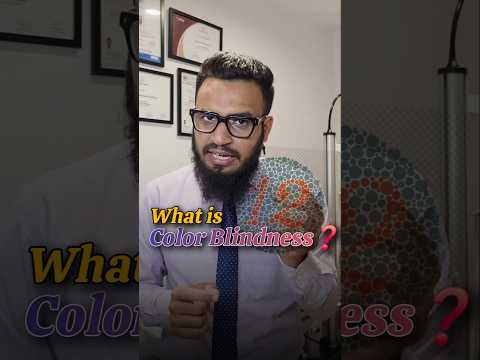
The Three Main Types of Color Blindness
When discussing color blindness, it is helpful to break it down into categories. There are mainly three types of this vision deficiency:
1. Red-Green Color Blindness
This is the most common form of color blindness. People with this type have a hard time distinguishing between red and green hues. Depending on the exact nature of the defect, reds may look more green, or greens may look more red.
2. Blue-Yellow Color Blindness
Less common than the red-green variety, blue-yellow color blindness affects a person's ability to tell the difference between blue and green, as well as yellow and red.
3. Total Color Blindness (Achromatopsia)
This is the rarest form. Most people are completely unaware of this condition, but those affected are totally color blind and genuinely see the world entirely in shades of gray.
What Causes Color Blindness?
To understand why color blindness happens, we have to look at the anatomy of the eye. Blindness of this type occurs when there is a defect in the retina—specifically in the cone cells.
The retina contains two types of light-sensitive cells: rods (which handle low light) and cones (which handle color and detail). The cone cells are specifically responsible for detecting blue, yellow, and green colors. When these cone cells have a defect or are absent, color blindness occurs.
So, what causes this defect in the first place?
- Genetics (Congenital): Most color blindness is congenital, meaning a person is born with it. It is a genetic condition passed down through families (more commonly from mothers to sons).
- Disease-Related: While most cases are genetic, you can acquire color blindness later in life. It can be related to eye diseases like Glaucoma, or other problems that affect the retina or the optic nerve.
Can Color Blindness Be Corrected?
A common question is "Can we correct color blindness?" The short answer is yes, we can correct it, though we cannot permanently heal or cure the underlying genetic cause.
Currently, there is no medical treatment to fix the cone cells in the retina. However, technology offers excellent ways to help patients with color differentiation.
The primary methods for correction are:
- X-Chrome Contact Lenses: These are specialized contact lenses that use a tinted optical filter worn in one eye. They alter the wavelengths of light entering the eye, helping the brain better distinguish between colors.
- Color Blind Glasses: Similar to the contact lenses, these glasses use specialized optical filters that enhance color contrast and help patients differentiate hues more easily.
These visual aids are incredibly helpful for day-to-day tasks and can even assist patients in passing diagnostic tests like the Ishihara test.
How is it Diagnosed? Take a Color Blind Test
If you suspect that you or someone you know might have a color vision deficiency, it is very easy to find out. Eye doctors typically diagnose the condition using an Ishihara test.
The Ishihara test consists of circles made up of colored dots of varying sizes. Inside the circle, a number or shape is formed using dots of a different color. A person with normal color vision will easily see the number, while a person with color blindness will either see a different number or nothing at all.
Check Your Color Vision Right Now
You don't have to wait for an eye doctor appointment to get a basic idea. You can take our clinical online color blindness test right here on our website.
Take the Color Blind TestConclusion
Understanding why color blindness occurs is the first step in accommodating it. By knowing the causes and the available solutions like the X-Chrome lenses and specialized glasses, those affected can navigate a colorful world with much more ease.